
March 2, 2026
Buying and selling at the same time can feel like trying to jump from one moving train to another. It is possible, but timing and strategy matter.
Is It Easy to Buy and Sell at the Same Time in the Twin Cities?
The honest answer? It can be smooth, but it is rarely effortless.
Buying and selling at the same time in the Twin Cities real estate market is very doable. Many Minnesota homeowners navigate both transactions successfully. The difference between “manageable” and “overwhelming” usually comes down to preparation, timing, and financial flexibility.
It tends to feel easier when:
You have strong equity in your current home
The Twin Cities market favors sellers and homes are moving quickly
You have flexibility for temporary housing or short-term overlap
You understand options like contingent offers or rent-back agreements
You have a clear plan before listing or writing offers
It may feel more complex when:
Inventory is low and buying is highly competitive
You cannot comfortably manage overlapping mortgage payments
You need proceeds from your sale to fund your purchase
Market conditions are shifting quickly
In the Minnesota housing market, seasonality also plays a role. Spring often brings more competition, while winter can offer buyers more negotiating room. Understanding how inventory, demand, and interest rates affect the Twin Cities real estate market can help you decide whether the timing is right.
Why Timing Matters in the Twin Cities Market
When buying and selling at the same time, timing can influence everything from competition to pricing strategy. In the Twin Cities real estate market, seasonal patterns play a real role in how smoothly your transition unfolds.
Spring Market Timing
Spring is typically the most competitive season in the Twin Cities. Buyer activity increases, listings hit the market, and multiple offers become more common. Homes often show at their best with longer daylight, green lawns, and improved curb appeal, which can make selling easier.
However, that same demand can make buying more challenging. You may face bidding wars or tighter timelines. In spring, it is often easier to sell but more competitive to purchase.
Winter Market Timing
Winter brings fewer listings and fewer buyers. The pace slows, which can reduce competition on the buying side and create more room for negotiation.
On the selling side, snow and colder weather can impact showings and curb appeal. That said, winter buyers tend to be serious and motivated. While there may be fewer showings overall, the ones you do get are often high intent.
School-Year Considerations
For many families in Minneapolis, St. Paul, and the surrounding suburbs, timing revolves around the school calendar. Spring and early summer tend to see higher suburban demand as families aim to move before the next school year begins.
Understanding how seasonality affects inventory, buyer demand, and competition in the Twin Cities helps you decide when to list and when to purchase. Once you understand the timing, the next step is choosing the strategy that fits your situation best.
Your Main Options When Buying and Selling at the Same Time
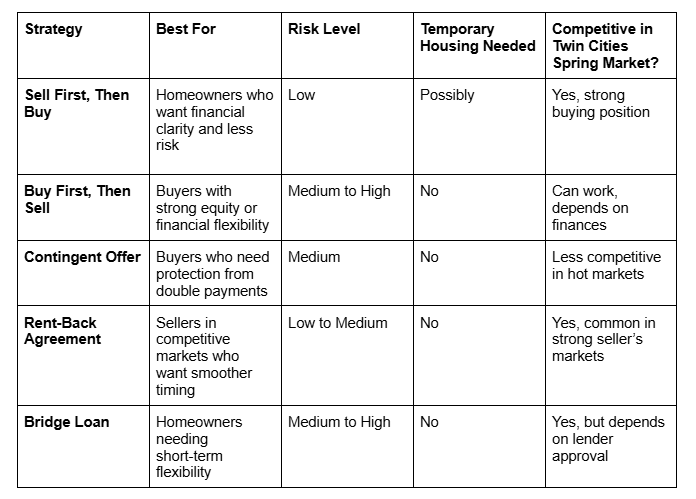
There is no one-size-fits-all approach to buying and selling at the same time in the Twin Cities real estate market. The right strategy depends on market conditions, your financial flexibility, and how much risk you are comfortable with. Here are the most common options Minnesota homeowners use.
Option 1: Sell First, Then Buy
This is the most predictable approach. You sell your current home before purchasing your next one. It gives you clarity on your budget and makes your next offer stronger since it is not contingent. The trade-off is timing. You may need temporary housing or flexibility if inventory is low in the Twin Cities market.
Option 2: Buy First, Then Sell
With this strategy, you secure your next home before listing your current one. It can reduce pressure when house hunting and avoids a temporary move. However, it may mean carrying two mortgages for a period of time. This option works best for homeowners with strong equity and financial flexibility.
Option 3: Make a Contingent Offer
A contingent offer means your purchase depends on selling your current home. This reduces financial risk but can be less competitive in a hot Twin Cities spring market. In slower market conditions, contingent offers are often more workable.
Option 4: Negotiate a Rent-Back Agreement
A rent-back allows you to sell your home but stay in it temporarily after closing. This can create a smoother transition and eliminate the need for short-term housing. It is common in competitive Minnesota markets where buyers are motivated.
Option 5: Use a Bridge Loan
A bridge loan provides short-term financing so you can access equity from your current home before it sells. It offers flexibility but comes with added costs. This option is typically best for financially prepared homeowners who want to reduce timing pressure.
Once you understand your options, the next step is choosing the one that aligns with your financial goals and timeline.
Financial Considerations to Plan For
Buying and selling at the same time means you are temporarily living in two financial worlds.
Your equity from your current home is usually what powers your next purchase, so timing matters. If you sell first, your budget is straightforward. If you buy first, you may need flexibility to float both homes for a short time.
It is also easy to forget that you will likely pay closing costs on both transactions. Add in the possibility of overlapping mortgage payments, and those few in-between weeks can feel more expensive than expected.
And because this is Minnesota, there are seasonal factors to consider. Property taxes are typically due in May and October, which can impact cash flow depending on your closing date. Heating bills in February look very different than utility costs in July, so if you are overlapping homes during colder months, that can add up quickly.
The goal is not to complicate things. It is to make sure you walk into the process knowing what to expect. When the financial pieces are clear, everything else feels more manageable.
Emotional and Practical Realities
Buying and selling at the same time is not just a financial decision. It is a mental one. There are two timelines. Two sets of paperwork. Two inspections. Two sets of emotions.
Decision fatigue is real. You are evaluating offers on your current home while also deciding whether the kitchen in another house feels “right.” It is a lot.
Then there is the practical side. Packing while house hunting. Keeping your current home spotless for showings while living in it. Trying to coordinate inspections, appraisals, and moving schedules all at once. Keeping your house clean for showings while packing boxes is a special kind of chaos.
It can feel like a lot at first, and that is normal. But with a solid plan and clear next steps, it shifts from stressful to structured pretty quickly.
Why Working With a Local Twin Cities Realtor Matters
When buying and selling simultaneously, strategy is everything. A local Twin Cities Realtor helps with sequencing. Should you list first? Should you write a contingent offer? Is a rent-back realistic in this market? These decisions depend heavily on current inventory, buyer demand, and neighborhood trends.
Market timing also matters. Spring competition looks very different from winter activity. A local expert understands how Minneapolis, St. Paul, and surrounding suburbs may behave differently.
Negotiation becomes especially important when two transactions are involved. Structuring contingencies correctly, negotiating timelines, and aligning closing dates requires experience and attention to detail.
Perhaps most importantly, having someone coordinate the moving pieces reduces stress. When you are not managing everything alone, the process becomes clearer and more predictable.
Planning Makes All the Difference
Buying and selling at the same time in Minnesota is absolutely possible. It just works best with intention. When you understand your finances, plan for the emotional ups and downs, and choose a strategy that fits the Twin Cities market, everything starts to click into place.
If you are starting to think about your next move, even if it is just in the “what if” stage, having a conversation early can help you explore your options and create a plan that fits your timeline. No pressure, just clarity.
